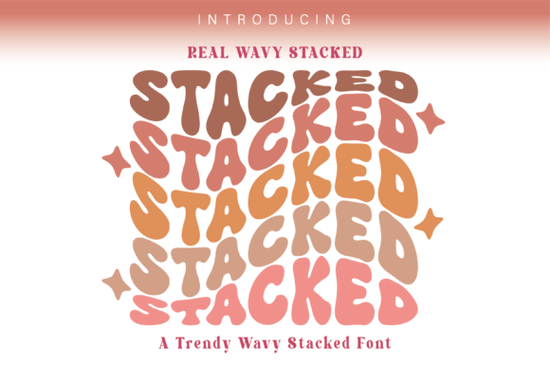
Finding the right typography for a retro project can be tricky. You want something that captures the 70s vibe without looking cliché or hard to read. The Real Wavy Stacked Font offers a distinct layered look that solves this problem. It is designed to help you create trendy text designs quickly, whether you are making logos for a small business or graphics for apparel. This typeface brings a groovy feel that stands out on social media and physical products alike.
Many designers struggle with standard fonts that lack character. When you need lettering with personality, stacked effects provide depth without requiring complex illustration skills. This font includes seven glyphs that allow you to customize the look easily. You do not need to be an expert in vector software to get good results. The curves are smooth, and the weight is balanced, making it legible even at smaller sizes. It is a practical tool for anyone who wants to add a touch of nostalgia to their work.
What Makes the Stacked Effect Useful?
The main appeal of this typeface is the built-in layering. Normally, creating a stacked text effect requires duplicating layers and offsetting them manually in your design program. This font handles that work for you. By using the included glyphs, you can toggle between different styles instantly. This saves time during the drafting phase and keeps your file structure clean. It is particularly helpful for print-on-demand sellers who need to produce multiple variations of a design for different products.
For example, if you are designing a t-shirt, the bold lines ensure the text remains visible against various fabric colors. The wavy baseline adds movement, making the design feel dynamic rather than static. This is essential for capturing attention in a crowded marketplace. If you prefer a softer look for children's products, you might explore rounded styles instead, but for retro apparel, this stacked approach is often more effective.
How Does It Compare to Other Retro Styles?
When browsing through vintage display options, you will notice many fonts try to mimic the past. Some rely heavily on distress or grunge textures. While those have their place, they can sometimes reduce readability. If you need something with more edge, you could look at distressed lettering, but the Real Wavy Stacked Font keeps things clean. It focuses on shape and form rather than texture. This makes it more versatile for branding where clarity is key.
Pairing is another important factor. A display font like this often works best when combined with a simpler script or serif. If you are looking for duo font pairings, you can find complementary scripts to balance the boldness of the stacked letters. Using two different typefaces creates hierarchy in your design. It guides the viewer's eye to the most important information first. This technique is standard in professional logo design and marketing materials.
Is This Suitable for Commercial Projects?
Most users downloading this type of asset are interested in commercial use. Whether you are selling mugs, posters, or digital planners, licensing matters. Creative Fabrica generally provides licenses that cover print-on-demand services, but you should always check the specific terms before selling. This font is built for everyone, from hobbyists to established agencies. The ease of use means you can iterate on ideas faster. Speed is crucial when testing new designs for seasonal sales.
If you have a specific vision that you cannot find in the current library, you might consider checking community requests to see if others are looking for similar styles. Sometimes, designers create new assets based on what users want to see. In the meantime, this font serves as a strong foundation for groovy projects. It works well for music festivals, coffee shop branding, and summer campaign graphics.
Quick Design Checklist
Before you finalize your project, run through these steps to ensure the best results:
- Check Legibility: View your design at 100% zoom to ensure the stacked layers do not blur together.
- Test Contrasts: Place the text over both light and dark backgrounds to verify visibility.
- Use Glyphs: Cycle through the seven included glyphs to find the variation that fits your layout best.
- Pair Wisely: Combine with a simple sans-serif for body text to avoid visual clutter.
- Review License: Confirm the licensing terms match your intended commercial use case.
Taking these small steps ensures your final output looks professional. Good typography enhances the message rather than distracting from it. With the right tools, you can create designs that resonate with your audience without spending hours on manual adjustments.
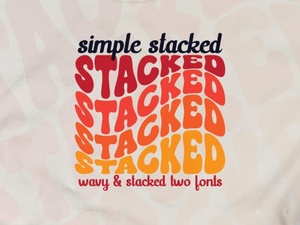 Easy Stacked Typography Design Tutorial
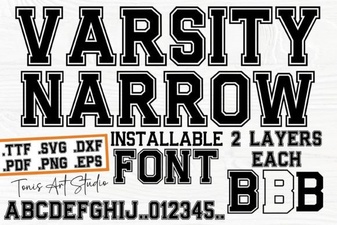 Creative Projects with the Varsity Narrow Font
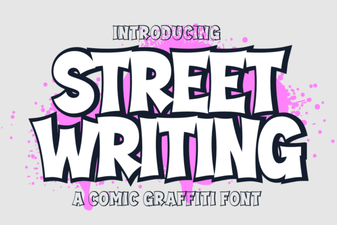 Urban Scripts: Design Tips & Creative Project Ideas
 Unlock Elegant Typography with Cormorant Garamond
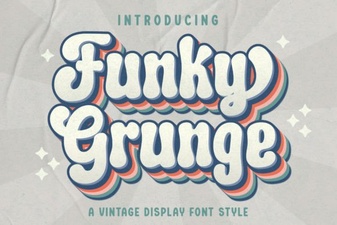 Unleash Your Designs with Funky Grunge Fonts
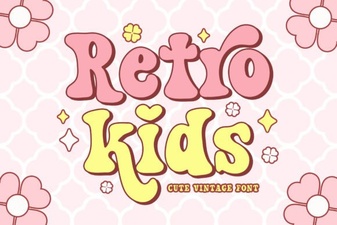 Bring Retro Font Fun to Kids' Designs